Decky AI is now part of Umbrex's AI Tools for Consultants
Umbrex curates an AI tool directory for a network of independent consultants who mostly came out of McKinsey, BCG and Bain. That is a demanding audience to be listed in front of, and it is a useful way to talk about the standard a slide tool has to meet.

Umbrex has added Decky AI to AI Tools for Consultants, its curated directory of tools for independent consultants. We are pleased about it, and not mainly for the traffic. It is the audience.
Who reads that directory
Umbrex was founded in 2015 by Will Bachman, Jing Liang and Margarita Soto, after Bachman left McKinsey to run his own independent practice. It has grown into a global network of independent management consultants with members in more than fifty countries, working for Fortune 500 companies, private businesses and consulting firms. By Umbrex’s own count, 90% of its consultants are alumni of top-tier firms with industry experience, and the network includes over 1,000 McKinsey alumni, 600 from Bain and 500 from BCG.
That is a specific kind of reader. These are people who trained somewhere a deck is the unit of work, where a slide gets sent back because the source line is the wrong size or a chart uses a colour that is not in the palette. They went independent and took the standard with them. When they evaluate software, the question is not whether it saves an hour. It is whether the output survives the review they used to give.
Umbrex describes the directory as “a curated list of AI tools designed to help consultants improve productivity, streamline workflows, and deliver higher-quality client work.” The last clause is the hard one.
What that standard actually asks of a slide tool
We have spent a lot of time with consultants who hold this bar, and their requirements are more specific than “make good slides.” Four of them come up every time.
The deck has to stay the source of truth. If a tool builds slides somewhere else and hands back a file, everything downstream is a repair job: fonts, placeholder positions, the layout logic in your master. Working inside the open presentation is not a convenience feature. It is what keeps the master, and every rule encoded in it, in force.
Charts and tables have to be real objects. A picture of a chart is not a chart. It cannot absorb the number that changes at 11pm, it cannot be recoloured to match a client palette, and it announces itself the moment someone clicks on it. Native, editable charts and tables are the difference between a slide that is finished and one that merely looks finished.
The quiet rules have to hold. Currency and decimal conventions, thousands separators, date formats, citation style, sentence case in one place and title case in another. None of it is interesting. All of it is what a reviewer marks up first, and it is the category where a tool either saves real time or creates a new class of cleanup.
Most of the work is editing, not generating. The blank page is a small part of the job. The larger part is a deck that already exists and needs a chart rebuilt, a page restructured, a section translated, or a consistency pass before it goes out. A tool that only creates is only useful on Monday morning.
What the listing says
Umbrex describes Decky AI as “a PowerPoint add-in designed for consultants and other professionals who build data-heavy presentations,” aimed at management consultants, investment bankers, private equity and corporate strategy professionals who need to turn analysis into a finished deck while adhering to firm or client templates.
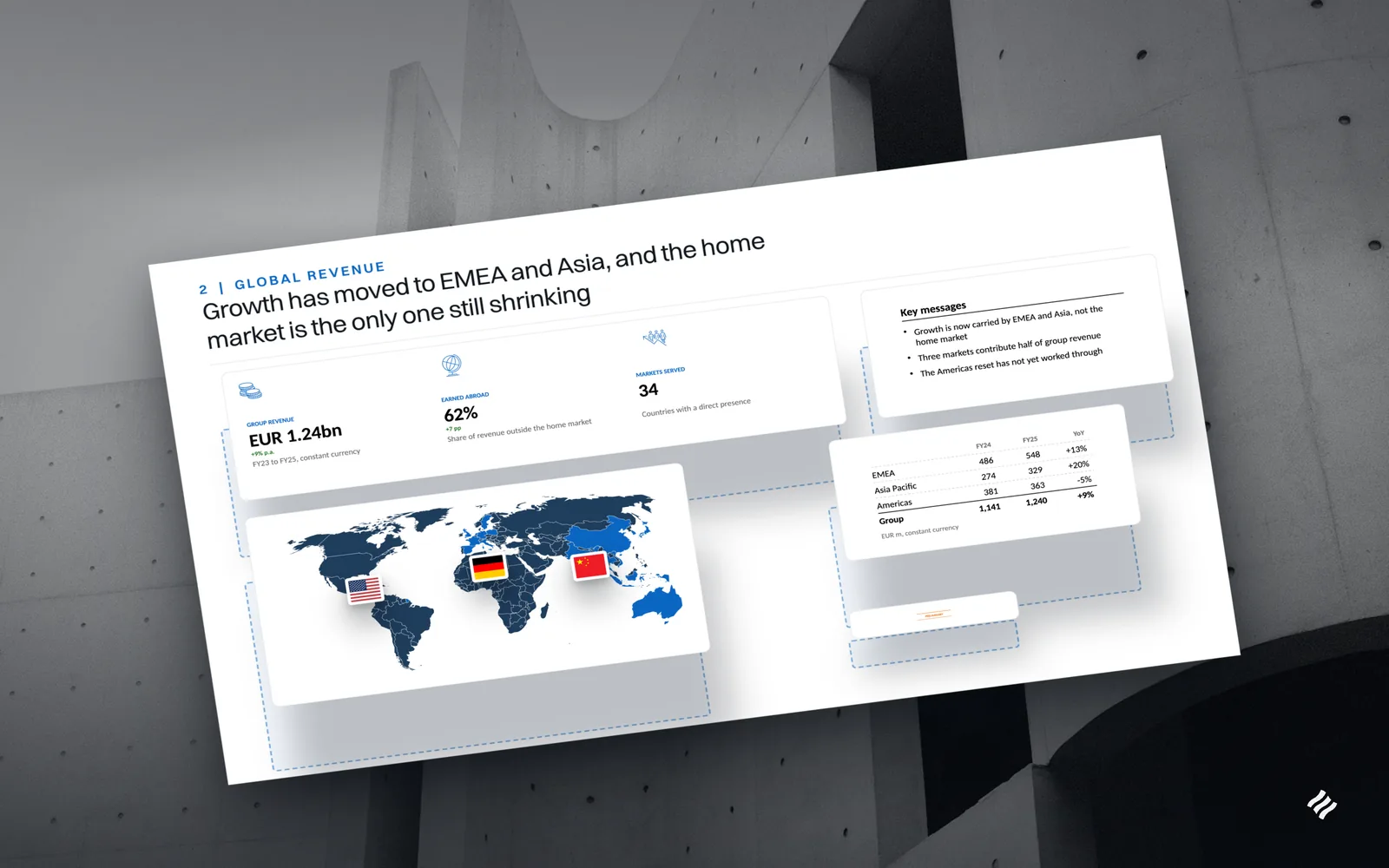
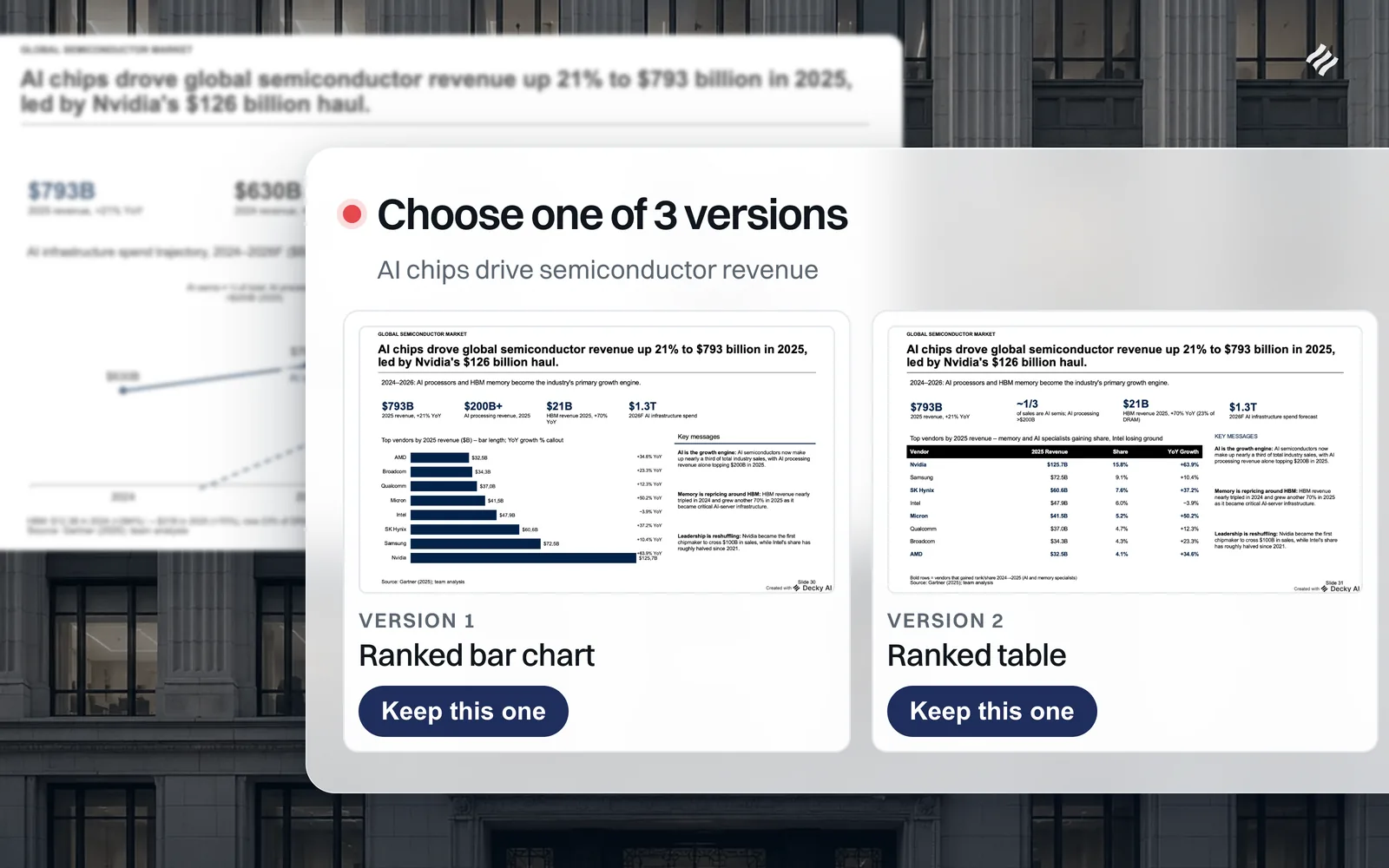
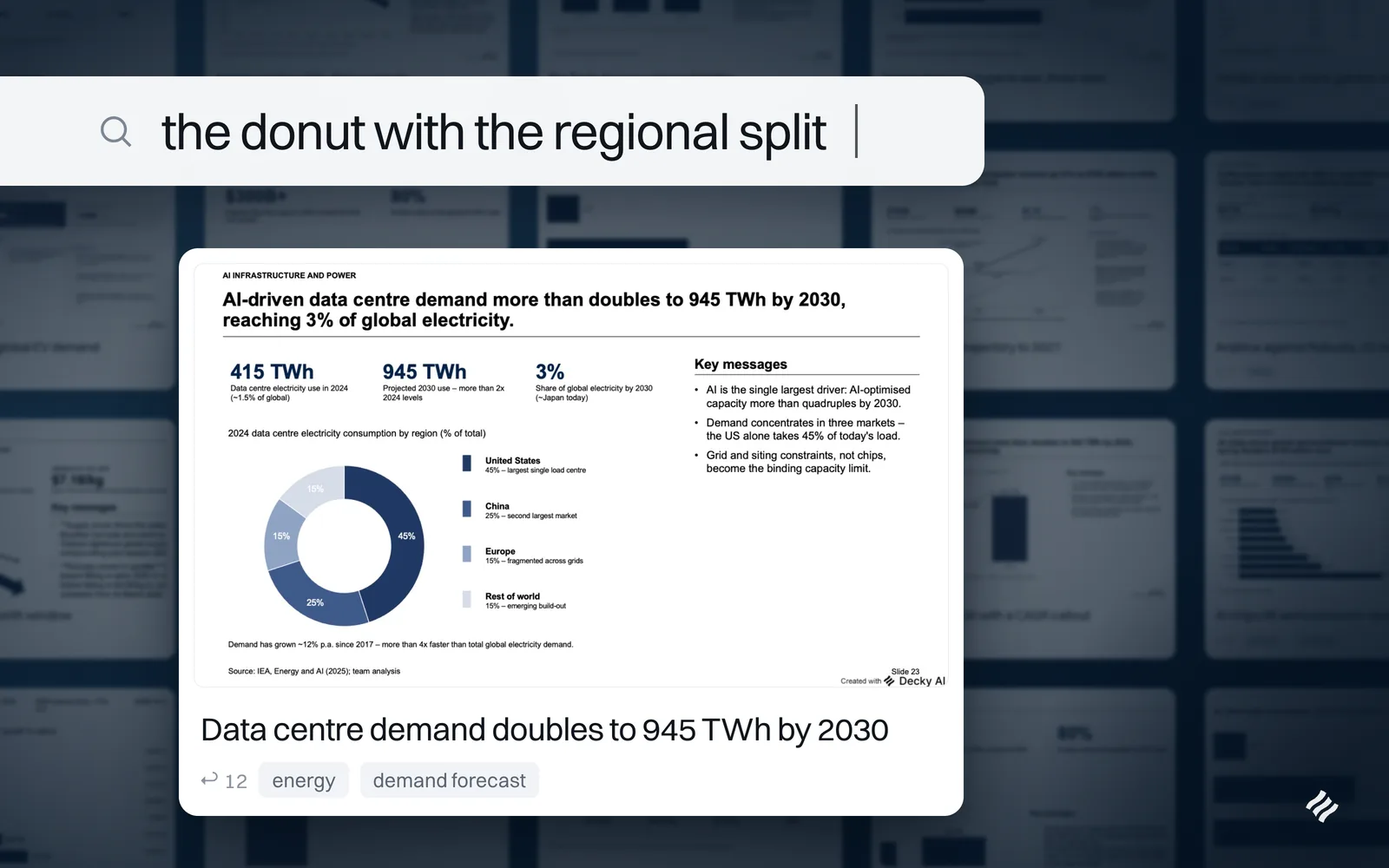
That is a fair description of what we set out to build. Decky works inside PowerPoint. It builds slides from the material you already have, including Excel, PDFs, Word documents and photographs of a page you drew by hand. Charts and tables come through as native, editable PowerPoint objects. It takes the structural rules from your master and the rest from a style guide you write once, then applies both to new slides and to the deck you are already working on.
Their bar is the bar we build against
Being included in a list curated for consultants of this calibre is the validation we care about most, and it has little to do with the directory itself. It is about who the list was written for. These are people who spent years having their work marked up by some of the most demanding reviewers in the business, and who now carry that standard into their own practices, with their own name on the cover page.
That standard is the design brief. It is why Decky works inside PowerPoint instead of exporting into it, why charts and tables arrive as native objects rather than images, and why a style guide sits alongside the master. Consultants who hold that bar are the reason those choices were made, and they are the first to notice when one of them is wrong.
Our thanks to the Umbrex team for including us. The only test that settles it is your own: if you want to see Decky against your firm’s template, book a walkthrough and bring a deck you would normally send to a client.

Maximilian Nitsche · Founder, Decky AI
I built Decky AI so anyone can put an MBB-level slide together and still be done before 8pm. I write here about the craft of consulting decks, and about what we ship.